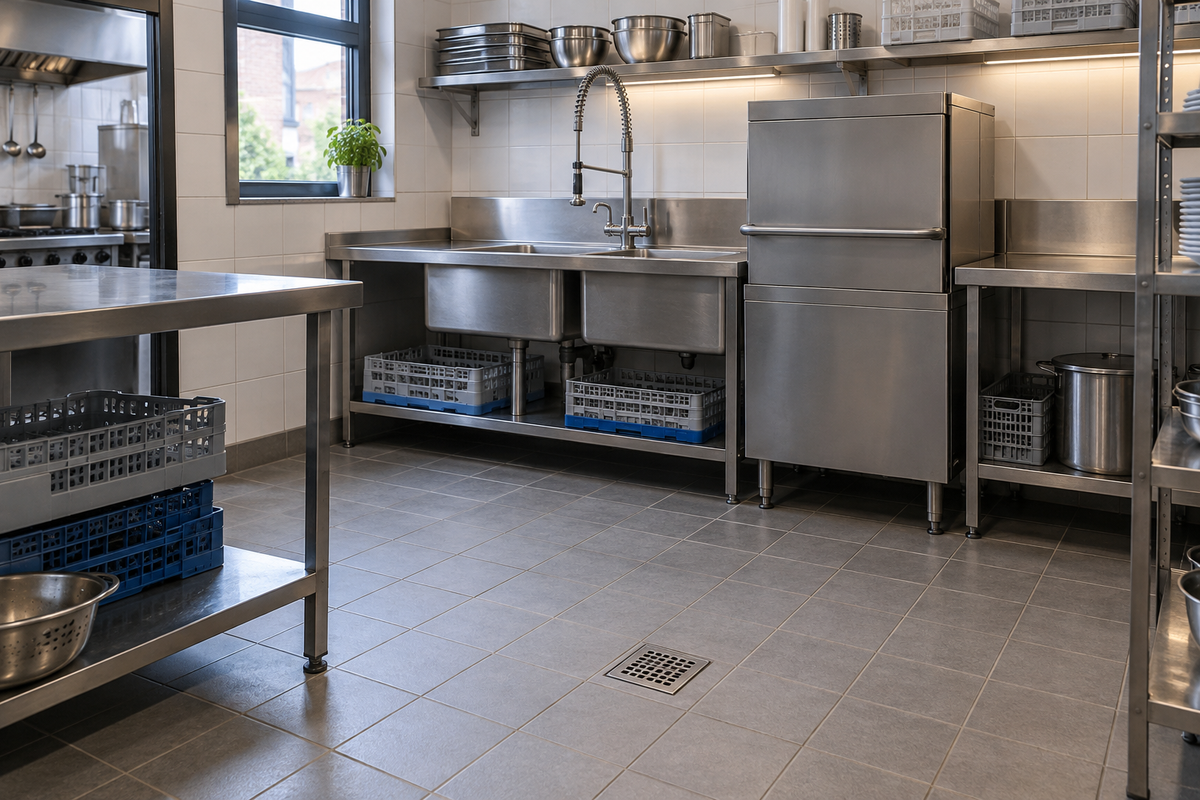
A recurring and harmful problem: odors in the sewers.
Sewer odors in restaurants are more than just an olfactory nuisance. They can directly impact the customer experience, damage the establishment’s reputation, and complicate compliance with health and safety standards. Customers expect a clean and welcoming space, and the presence of lingering odors can quickly dissuade them from returning.
Causes of Sewer Odors in Commercial Kitchens
Before tackling the problem, it is essential to understand its origins. The main causes of sewer odors in restaurant kitchens are:
-
Accumulation of organic matter : Food residue and grease collect in drains and traps. Over time, these materials decompose and generate foul-smelling gases (often hydrogen sulfide - H2S).
-
Lack of regular maintenance : Since drains and grease traps are not cleaned or emptied regularly, deposits build up, amplifying odors.
-
Unsipulated traps : When a trap loses its “water neck” (for example after pumping or strong suction), sewer gases rise back into the premises.
-
Sewer Stack Ventilation Problems : Poor ventilation can cause stale air to back up into the sewers.
These multiple causes require adapted solutions, and this is where Aquipond's innovation comes in: the Bactodeur .
Aquipond Bactodeur: an innovative biological response to sewer odors
Aquipond's team of experts, in collaboration with specialized biologists, has developed Bactodeur , a natural, effective and sustainable solution. Unlike chemical solutions that mask odors, Bactodeur acts at the source, by attacking organic deposits.
How does the Bactodeur work?
The Bactodeur contains a concentration of active micro-organisms selected for their ability to degrade organic matter. These bacteria act according to a natural process of bio-degradation, transforming food residues and fats into harmless elements (water and carbon dioxide).
The steps of Bactodeur action
-
Colonization of internal pipe surfaces : Bacteria adhere to the pipe walls and form a protective biofilm.
-
Decomposition of organic deposits : Microorganisms feed on fatty residues and food debris.
-
Odor removal at source : By eliminating the source of deposits, malodorous gases (especially H2S) are no longer generated.
-
Preventive maintenance : With regular applications, Bactodeur prevents the formation of new deposits.
The benefits of Aquipond Bactodeur for restaurants
-
100% natural and ecological solution : No chemicals, no risks for equipment or for the health of teams.
-
Long-lasting effectiveness : By acting directly at the source, the bacteria prevent new accumulations.
-
Ease of use : Simply pour the recommended dose into the pipes, without interrupting activity.
-
Controlled cost : Prevention helps reduce costly pipe cleaning operations.
Instructions for use of Aquipond Bactodeur
-
Dosage : Pour the recommended quantity (depending on the frequency of use and the volume of sewers) directly into the pipes.
-
Application Frequency : Weekly application recommended for preventative maintenance.
-
Precautions for use : No specific protective equipment required, as the product is safe and natural.
Practical cases and testimonials
-
Gastronomic restaurant in Paris : By using Bactodeur for 3 months, the establishment eliminated 90% of persistent sewer odors and reduced its cleaning operations.
-
Fast food chain : With hundreds of daily visits, odors were a recurring nuisance. By opting for Bactodeur, the cleaning of siphons was divided by 2.
Conclusion: An essential ally for restaurant management
Sewer odors in restaurant kitchens are not inevitable. With Aquipond Bactodeur , you have a natural, effective and environmentally friendly solution. This preventive approach, easy to implement, not only reduces odor nuisances, but also the costs related to maintenance interventions.