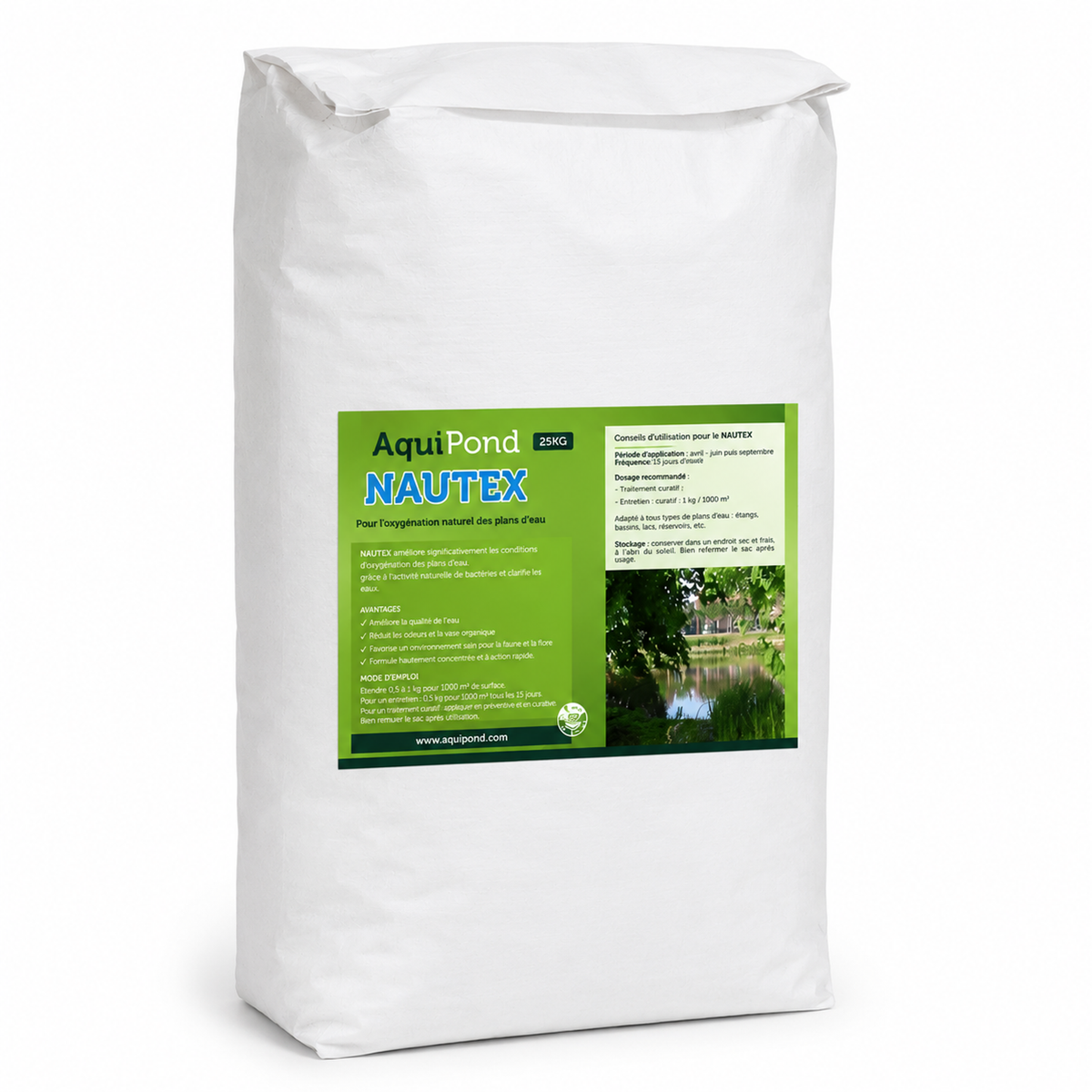
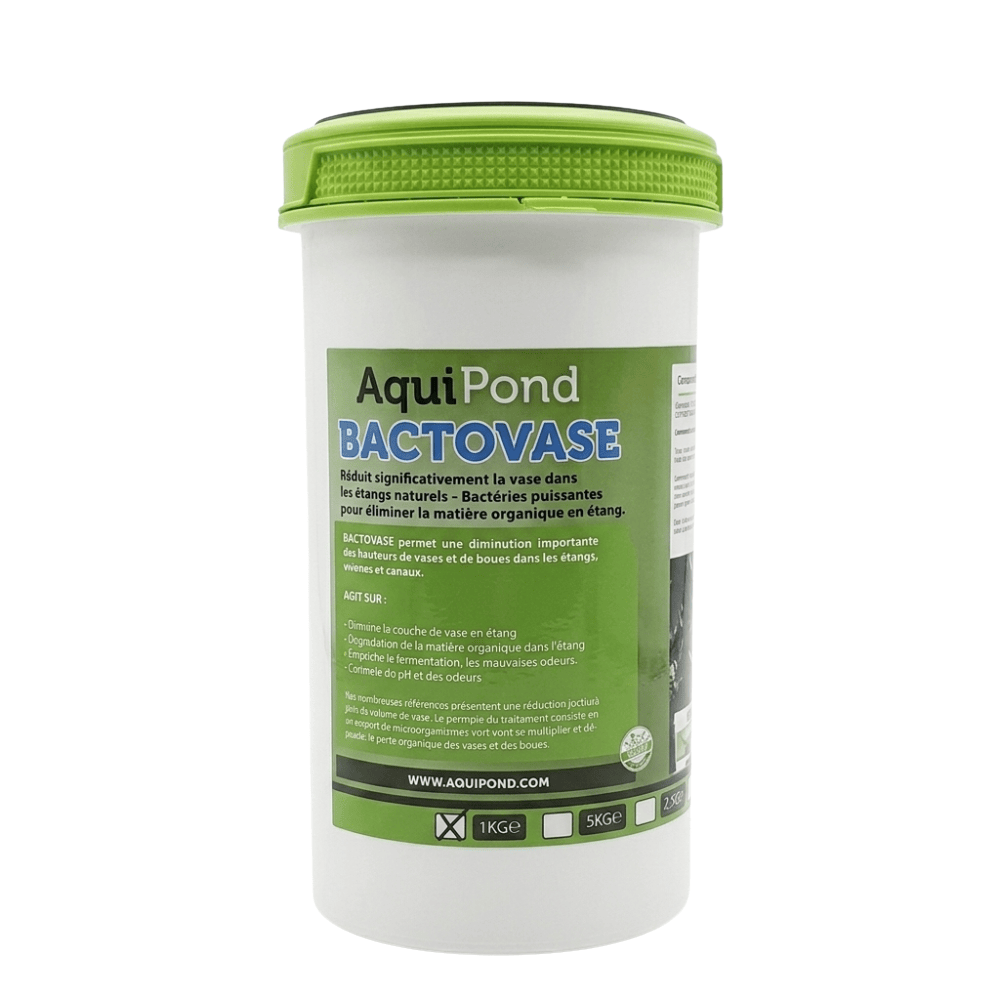

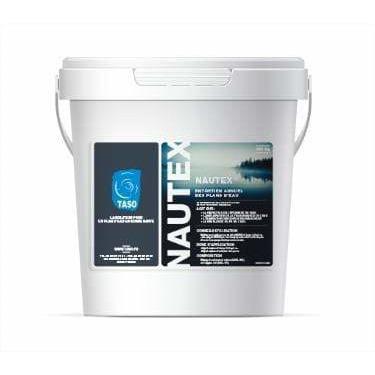

This collection of water treatments for ponds and garden ponds brings together bacteria, biological cleaners, and minerals. They complement filtration by breaking down organic matter before it can feed algae.
How to choose your treatment?
- Starting up a new or cleaned filter: starter bacteria such as Optinit.
- Maintaining filtration during the season: Bactogen.
- Organic matter and sludge: Biobooster+, or the Biobooster+ and Bactogen packs for comprehensive maintenance.
- The actual volume of the pond: Biobooster+ sizes range from 24 to 500 m³.
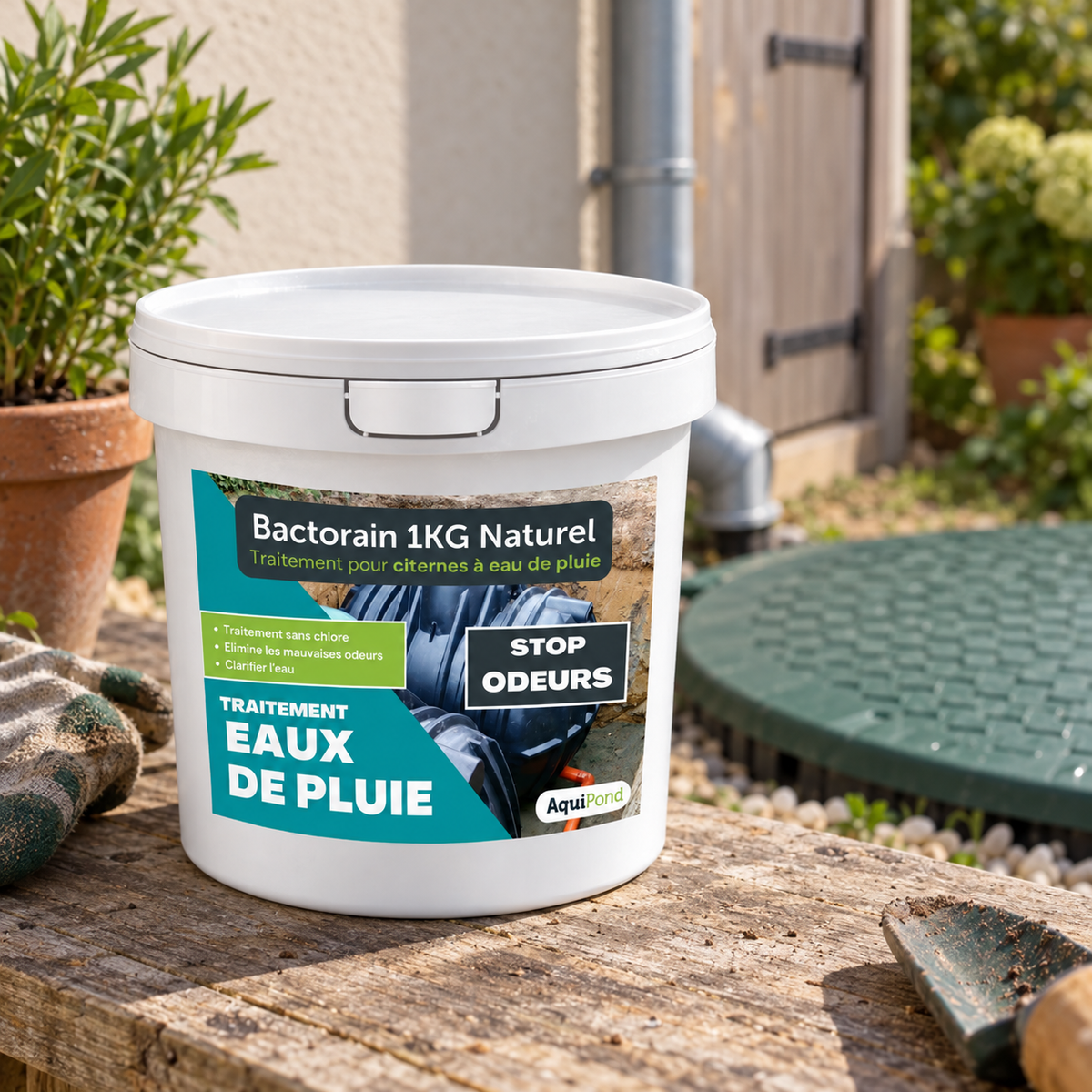
- Rainwater tank or micro-station: Aquipond BactoRain.
Aquiflor's advice
Start biological treatments as soon as the water warms up in spring, follow the recommended dosage, and do not clean the entire filter at once to preserve its bacteria. To tailor the program to your pond, call us on 010 86 03 54 or visit the Nodebais store.
Frequently asked questions
Should the water in a new pond be treated?
Tap water may contain chlorine and lacks the bacteria needed for filtration: starter bacteria help quickly establish biological filtration.
How do I determine the correct dosage?
Calculate the actual volume of the pond (length × width × average depth) and follow the dosage indicated per m³. Overestimating the volume leads to unnecessary overdosing.
Can several treatments be combined?
Yes, complementary biological products can be combined, such as a cleaner and filtration bacteria. However, avoid using bacteria and fish medications at the same time.
Also discover: Water hardness & Water quality for your pond, Bacteria for ponds & garden ponds, Algae control solutions for ponds & garden ponds.