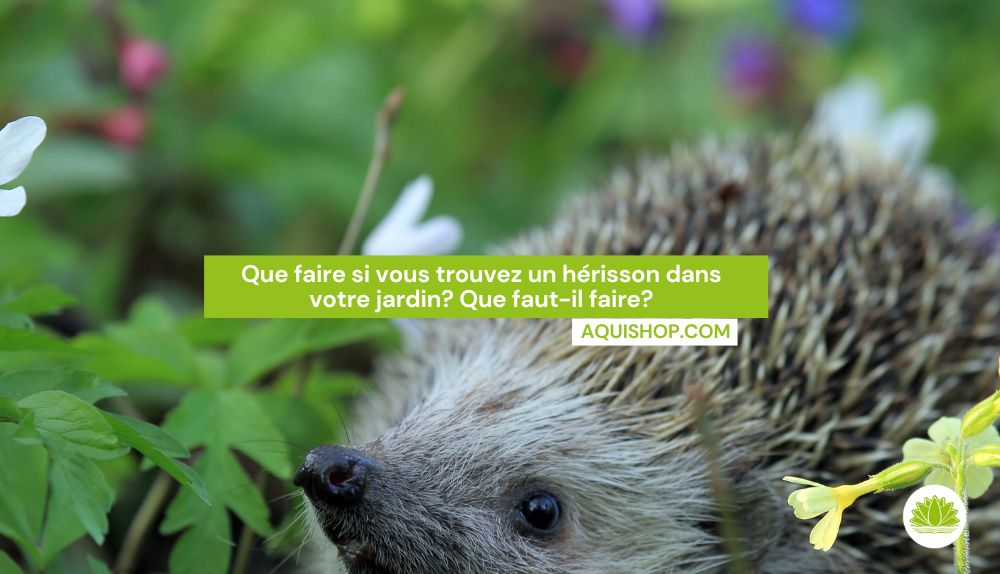
If you've found a hedgehog in your garden, you're in luck! These small nocturnal mammals, which have become rare in some regions, are valuable allies for the health of your garden. But what should you do when a hedgehog decides to settle in your home? In this article, we'll give you all the keys to react well, protect this prickly companion and create an ideal environment for it.
Why are hedgehogs so valuable to your garden?
The hedgehog is a natural ally to fight against certain pests. It feeds mainly on beetles, earthworms, snails and slugs. These small creatures can often harm plantations, but a hedgehog ensures to regulate their population. In return, your garden becomes a more balanced, healthy ecosystem in harmony with nature.
What to do if you find a hedgehog in your garden?
-
Do not move it
The first thing to do is not to move the hedgehog. If it has found refuge in your garden, it is because it has found a favourable environment there. Hedgehogs often need a territory that they know in order to feed and survive. It is therefore preferable to leave it where it is, unless there is imminent danger (such as a nearby road or a dog). -
Provide water, especially in summer
Hedgehogs need to drink regularly, especially during hot weather. A small bowl of fresh water, placed in a quiet corner of your garden, will be greatly appreciated. -
Offer suitable food
If you want to help him eat, you can give him cat or dog food (avoid fish), or food specially designed for hedgehogs. Never give him milk, this can cause serious digestive problems. -
Create a safe haven
At Aquishop , we offer hedgehog hotels that are specially designed to provide a safe haven for these animals. With a maze-like entrance to protect them from predators and an insulated space for the winter, a hedgehog hotel is an ideal solution to keep them safe all year round. Set it up under a bush or in a quiet corner, and cover it with leaves and branches to provide natural insulation. -
Avoid chemicals
Pesticides, herbicides, and other chemicals used in gardens are dangerous for hedgehogs. By eliminating them from your maintenance routine, you protect not only these small mammals, but also all local wildlife. Opt for organic and natural gardening methods. -
Create passages between gardens
A hedgehog can travel up to 2 km per night in search of food. It is important to allow it to move freely between neighbouring gardens by creating small holes or passages under fences, approximately 13 x 13 cm. This allows it to move around without being trapped in a single space, increasing its chances of survival.
What to do if the hedgehog appears injured or in danger?
If the hedgehog you find appears injured, sick, or is visibly in danger (for example, stuck in a net or fence), it is important to act quickly. You can contact a wildlife rescue center or a wildlife veterinarian. In the meantime, handle it carefully, wearing thick gloves to avoid injuring yourself with its quills, and place it in a ventilated box with a clean cloth.
Protecting hedgehogs: a gesture for the environment
By attracting and protecting hedgehogs in your garden, you are actively participating in the preservation of a species that is unfortunately in decline in many regions. Creating a favorable space for them also helps to regenerate local ecosystems.
Visit Aquiflor, the largest aquatic garden center in Belgium
To learn more about hedgehogs and how to create an ecological garden that respects local wildlife, visit Aquiflor , Belgium's largest aquatic garden centre. You will find expert advice and a wide range of products dedicated to the design of your aquatic or natural garden, including hedgehog shelters, natural solutions and native plants.
Don't forget to visit Aquishop , our online store, to discover our selection of products that promote biodiversity in your garden. By taking care of your outdoor space, you will make your garden a true haven of peace for wildlife, while enjoying a harmonious and balanced ecosystem.
Conclusion: A hedgehog in your garden? Take action to protect it!
The presence of a hedgehog in your garden is a real sign of health for your environment. By following these tips and equipping yourself with the right Aquishop products, you can not only protect this adorable mammal, but also create a space that is favorable to all biodiversity.
Take care of the nature around you, and it will take care of you!