The heron is the leading predator of garden ponds. Early in the morning, it passes by, lands at the edge, and waits. In autumn and winter, it is even more formidable: your fish, slowed by the cold, stay near the bottom and no longer flee. A single visit can empty a small pond.
How the heron hunts
It does not dive or land in deep water: it walks to the edge, then enters the shallow areas. All effective protections focus on this point: preventing it from accessing the edge or the water.
Solutions, from the safest to the simplest
1. The protective net
This is the most reliable protection: the heron physically cannot reach the water. Stretched over the pond, it also protects against falling leaves. View the nets.
2. The low fence at the edge
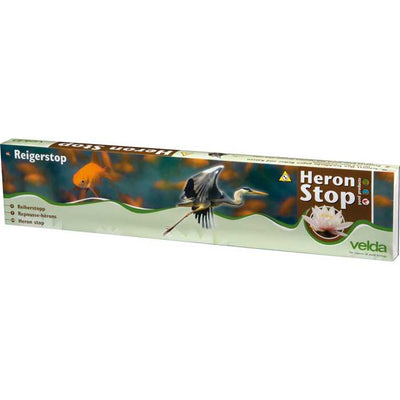
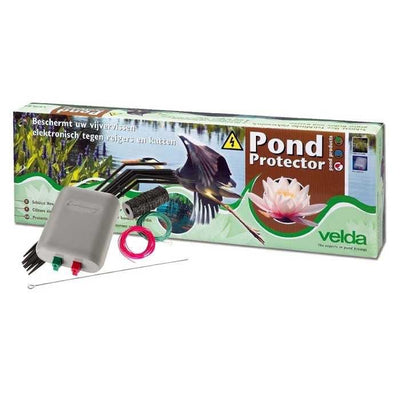
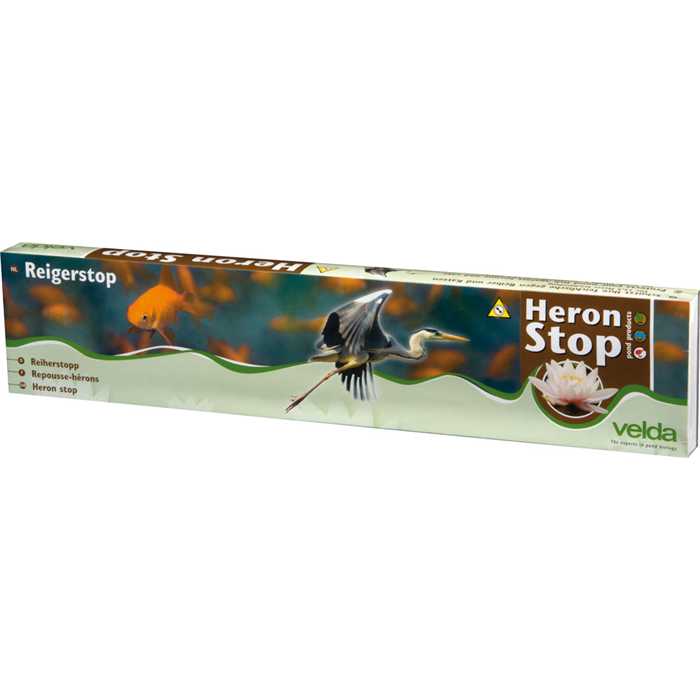
A wire stretched 20-30 cm above the ground, all around the pond, prevents the heron from walking in. Discreet and effective, like the Heron Stop kit. For large ponds, the Pond Protector electric fence also deters cats and foxes.
3. Active repellents
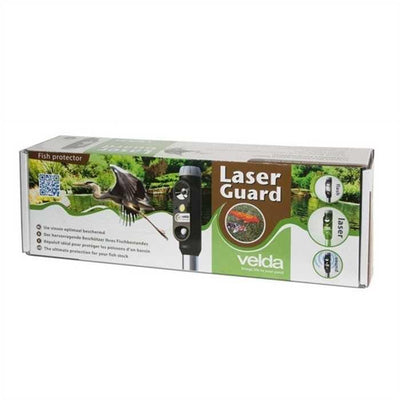
The Laser Guard scans the pond at night and at dawn: the heron feels watched and stays away. Useful when a net is not feasible.
4. Decoys
A fake heron can keep other herons away, as they are territorial. Move it every few days, otherwise it will eventually be ignored. Floating reflective balls work on the same principle.
Our expert advice
- Combine methods: a decoy alone is almost never enough. A decoy + low fence is a good aesthetic compromise.
- Provide hiding places: a deep area (at least 80 cm) and shelters (wide pipe, hollow stones) allow the fish to take cover.
- Act at the first visit: a heron that has fed once will return every day.
👉 All our heron protection. Have a question? Our experts will answer you at 010 86 03 54.