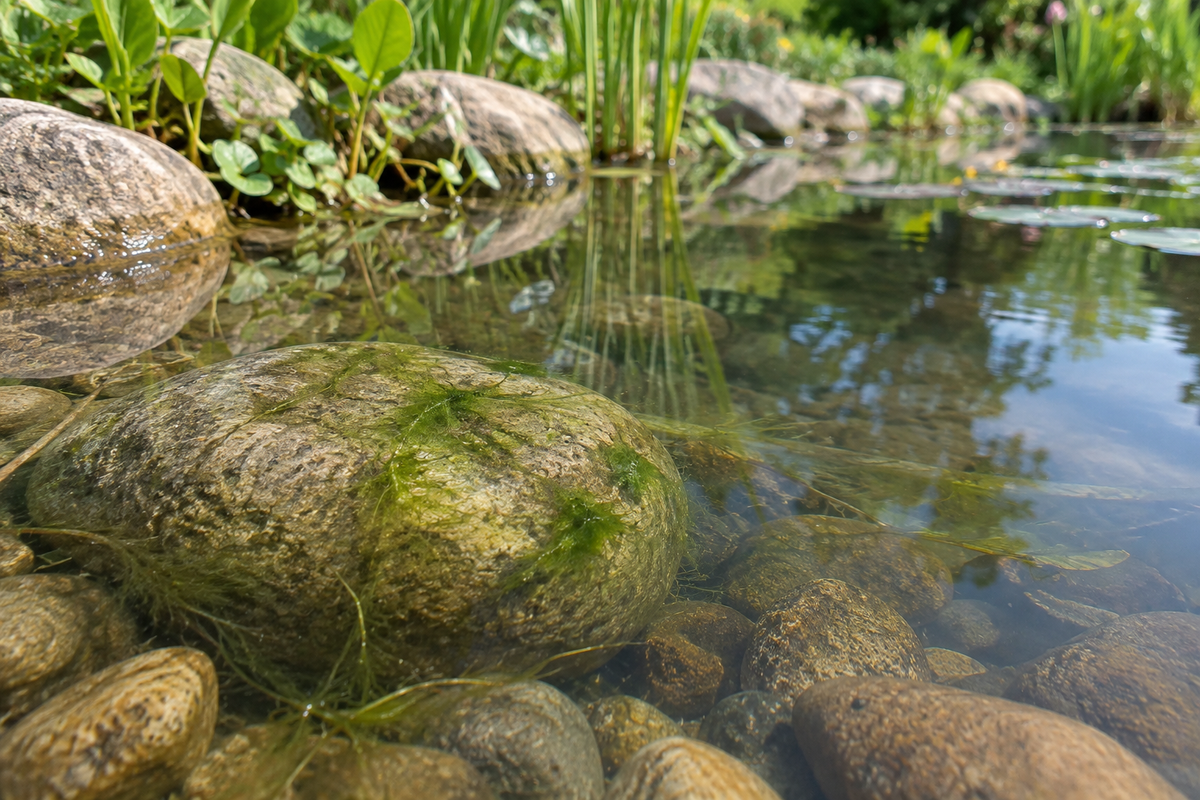
A slippery green layer on a stone, filaments clinging to plants, or a carpet returning to the bottom: the expression "slimy green algae" can refer to several phenomena. It describes what you see without, on its own, identifying the organism or the solution to be used.
The right reaction is to observe the form of the deposit, its location and its development, then to check the functioning of the environment. A garden pond and an aquarium require different interventions. Here are the useful benchmarks to get started without treating at random.

What does the word "slimy" cover?
Filamentous algae form threads, sometimes very thin, which attach to surfaces or cluster into tufts. Uniformly green water corresponds more to organisms in suspension. An adherent coating can combine different forms of life within a biofilm.
Cyanobacteria, often called blue-green algae, are photosynthetic bacteria. Some form slimy mats. Their color can be misleading: the word "blue" does not mean they always appear clearly blue.
These descriptions are used to guide a request for advice. They do not replace an identification, especially when thick mats, an unusual proliferation, or swimming uses are involved.
Observe without unnecessary handling
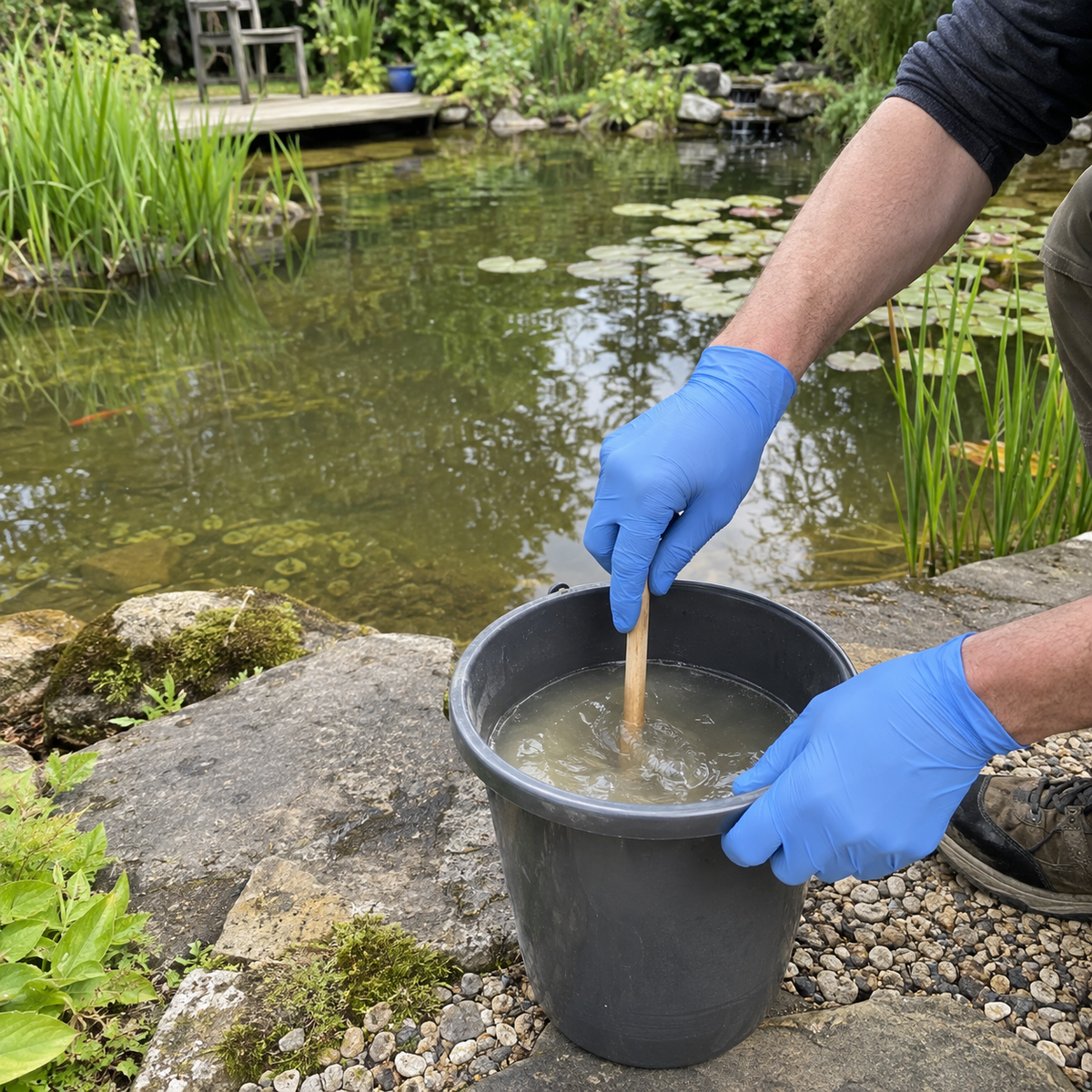
First, take a wide shot and then a close-up, if possible in natural light. Note whether the deposit remains fixed, peels off in flakes, or forms threads. Specify whether it occupies a single area or a large part of the pond.
Avoid relying solely on the color displayed on your phone. Reflections, artificial lighting, and depth change the rendering. A photo accompanied by a description and a date is much more useful than an isolated image.
Do not hold a sample up to your face to check for an odor. Never taste the water and do not prime a siphon with your mouth. If a specialized analysis becomes necessary, ask the professional how to collect and transport the sample.
The clues that guide initial checks
| Observed appearance | What to specify | First lead |
|---|---|---|
| Attached threads or tufts | Colonized surfaces and rate of return | Possible filamentous algae; examine light and nutrient inputs |
| Green water throughout the volume | Transparency of a sample, state of filtration | Organisms in suspension; check the clarification circuit |
| Slimy mat covering the bottom | Extent, recurrence, affected areas | Have the identification confirmed before treatment |
| Thin, stable coating on stones | Presence or absence of disturbance to the environment | Observe before undertaking major cleaning |
Several forms can coexist. A pond may have fairly clear water and filaments on the waterfall. Conversely, green water does not allow one to conclude that the same algae are present on all walls.
When to take extra precautions?
In an outdoor body of water, a suspicious proliferation requires suspending swimming and preventing pets from accessing the water. Some cyanobacteria can produce toxins; appearance does not allow for confirming or ruling out their presence.
The Walloon Public Service recommends avoiding suspicious water and consulting a doctor in case of symptoms after exposure. For an exposed animal showing abnormal signs, contact a veterinarian. Standard pond tests do not constitute a search for cyanotoxins.
If fish are breathing abnormally or gathering at the surface, their condition and water quality become the priority. Quickly check aeration, circulation, and relevant parameters, then request appropriate help. The green deposit does not automatically explain all symptoms.
In a pond: look for what feeds the proliferation
Observe the surroundings after rain. Soil or water coming from a fertilized area can reach the pond. Also look at accumulated leaves, uneaten food, and changes in the fish population.
Light also matters. A highly exposed pond, with little plant cover, offers different conditions than a partially shaded pond. The response must take into account the plants present and the objective of the pond, without systematically seeking sterile surfaces.
A simple notebook helps to identify links: date of proliferation, weather, recent work, filter cleaning, water addition, or changes in feeding. This chronology is often more instructive than a succession of treatments.
Measure before choosing a product

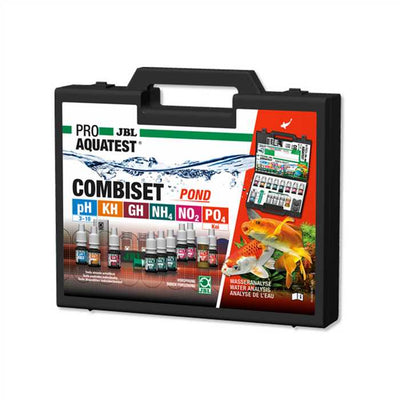
The JBL ProAquaTest CombiSet for ponds includes pH, KH, GH, ammonium, nitrites, and phosphates. Nitrates and oxygen are not part of this kit. Choose complementary tests according to the problem encountered.
Note the figures and units, as well as the date of sampling. A phosphate test does not prove that a mat is cyanobacteria. It provides information about the environment, to be interpreted with other observations.
Remove ordinary accumulations methodically
When the problem corresponds to well-identified ordinary filaments, gradual removal helps limit their mass. Work in small areas and monitor for animals that may be among the plants. Dispose of the removed material without letting it return to the water.
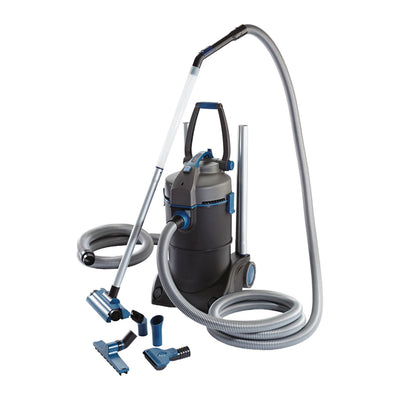
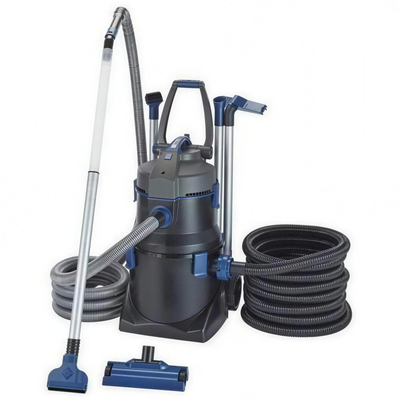
If significant organic deposits accumulate at the bottom, a PondoVac 4 vacuum or a PondoVac 5 can facilitate their removal in a suitable pond. Check access, depth, discharge, and volume of water extracted. The vacuum is not a diagnostic tool nor an automatic response to a suspicious mat.
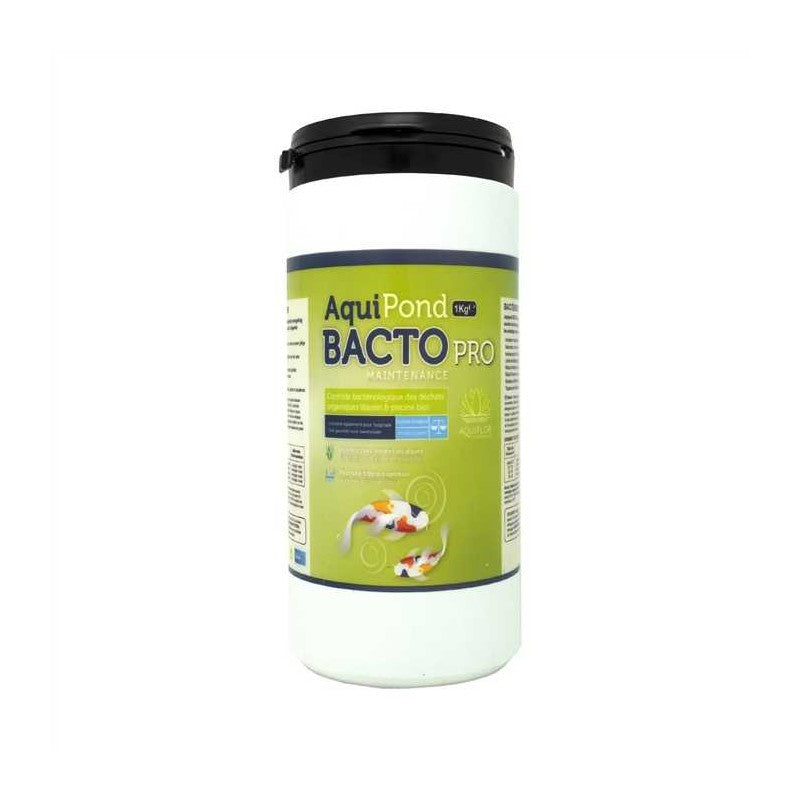
To support the management of organic sludge, Aquipond Bactovase may have its place depending on the conditions of use. It does not remove mineral sediments and should not be presented as a treatment for cyanobacteria or toxins.
What is the role of an algae treatment?
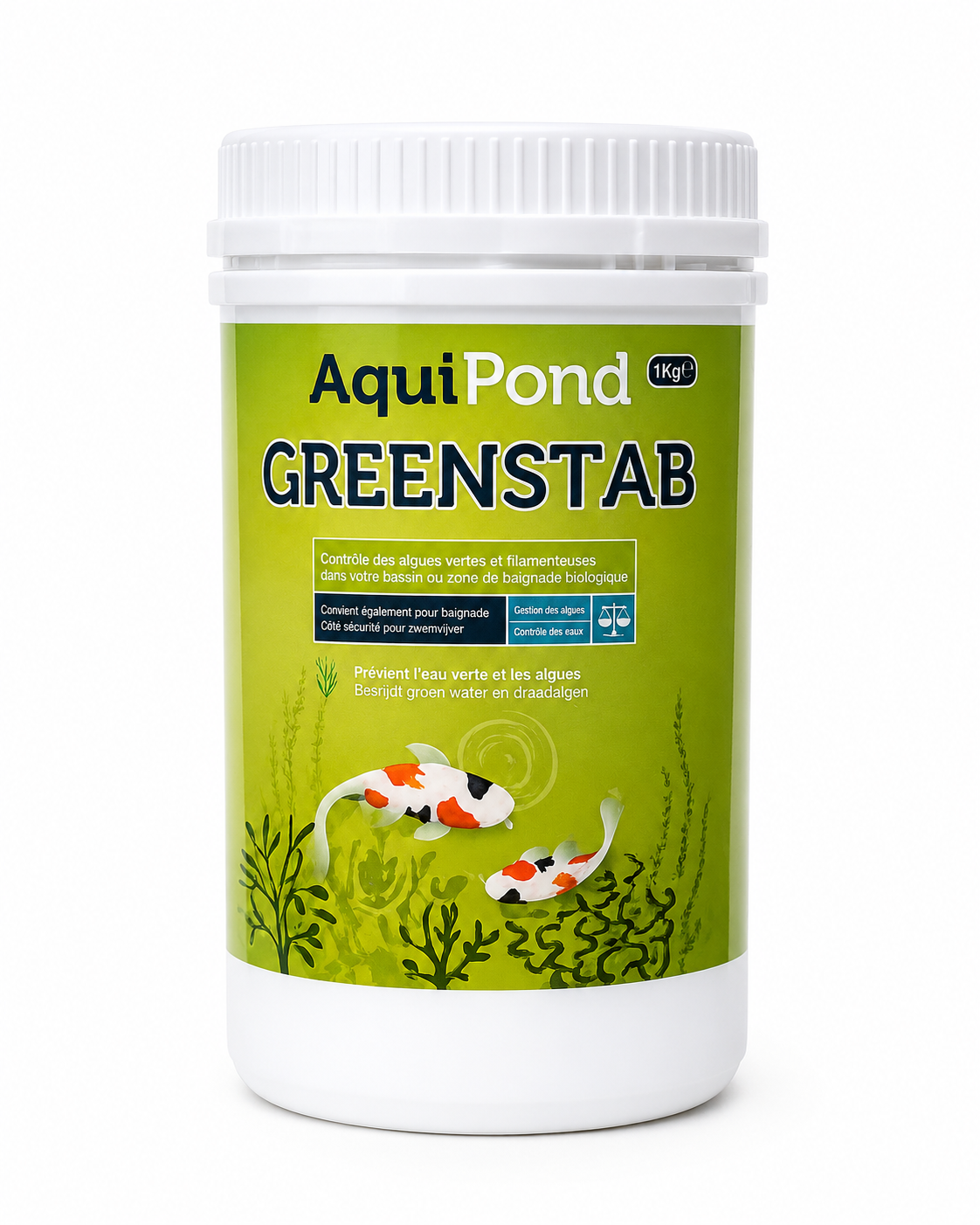
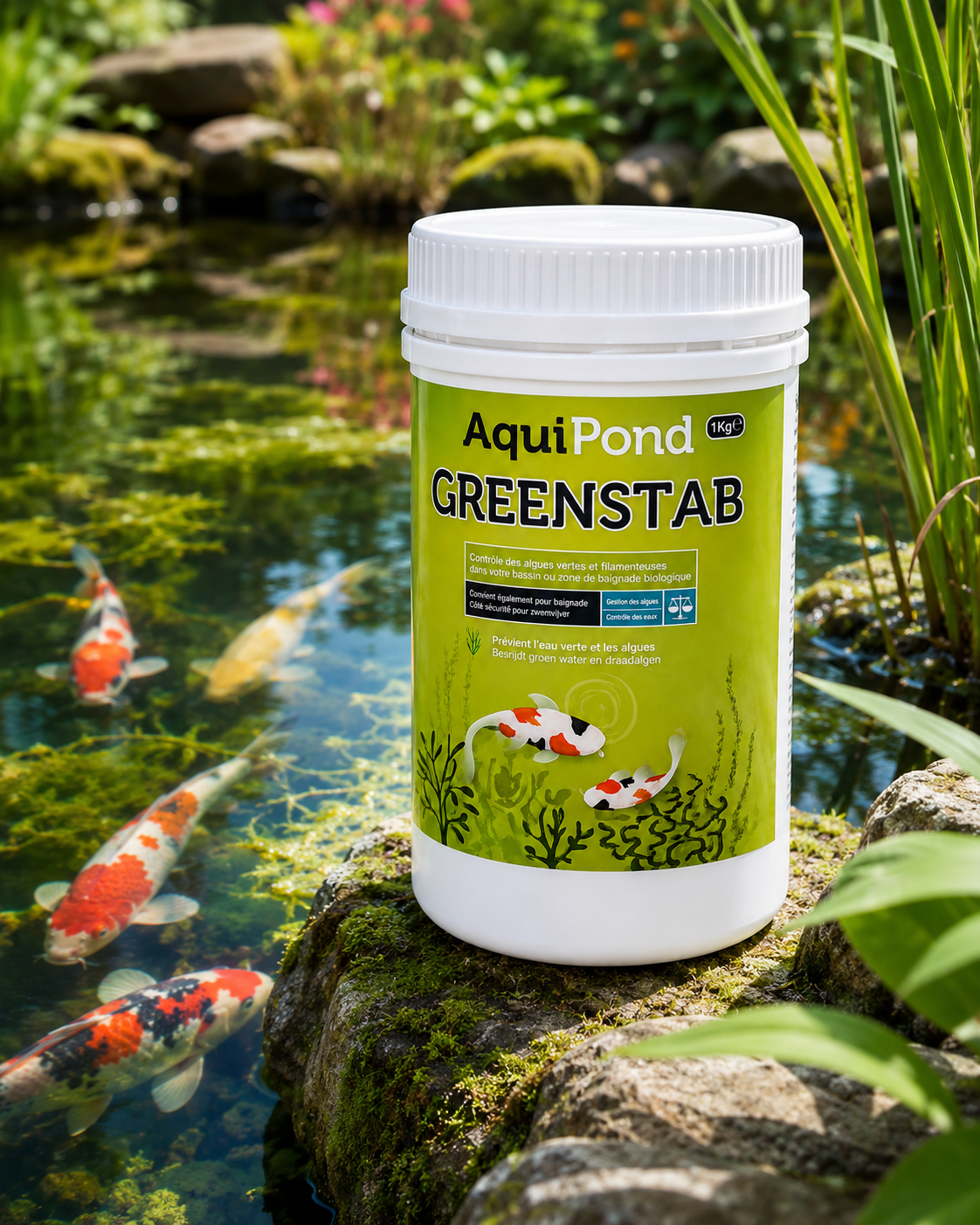
A reference such as Aquipond Greenstab should be considered according to its indication, the actual volume of the pond, and the current instructions. The expression "green deposit" is too imprecise to justify its use on its own.
Check compatibility with animals, plants, and other products already in use. Also plan for the collection of materials and the monitoring of the pond. Increasing simultaneous interventions complicates the evaluation of the result and may cause you to overlook the initial cause.
In an aquarium, restart the diagnosis at the right scale
The same word "slimy" does not justify using a product intended for ponds in an aquarium. The volume, population, substrate, and filter operation are different. Consult our guide to slimy deposits in aquariums to organize the checks specific to the tank.
In particular, do not replace all filter media and do not disinfect the entire installation to remove a localized deposit. First, have what you observe and what has changed recently clarified.
Check development after the intervention
Photograph the same area at regular intervals. Watch to see if the deposit spreads, if materials return to the same place, and if water inlets or supports become clogged. Also compare the behavior of the fish and the relevant measurements.
Need an opinion on your pond? Send the Aquiflor team a general view, a close-up, the estimated volume, and the available analyses. Specify the products used and their dates. These elements make it possible to propose a coherent next step.
Sources and useful reading
- RHS: types of algae found in ponds and proliferation factors.
- JBL: recognizing the main categories of aquarium deposits.
- SPW Environment: cyanobacteria and precautions in Wallonia.
- Aquishop product sheets cited for their use and limitations.