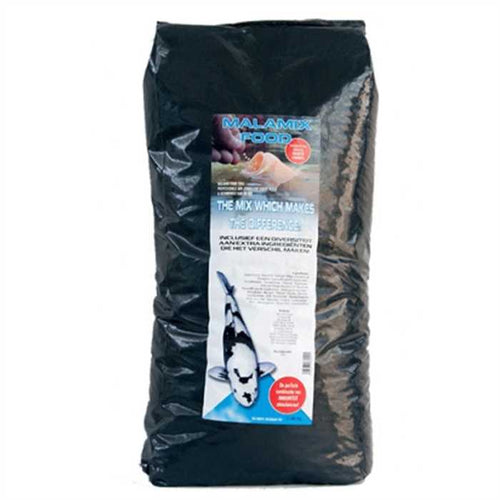


Your koi usually came to be fed and now stays away. Or the whole group is letting the pellets float. Your first reaction should be to observe and measure, before changing food three times.
A loss of appetite can accompany a change in temperature, stress, or a water problem. It can also be one of the signs of an illness. The goal is to understand the context, remove leftovers, and quickly identify situations that require professional advice.

A one-off refusal doesn't tell the whole story
Start by specifying what you saw. Is the fish no longer coming to the surface, or is it taking the pellets before spitting them out? Does it stay hidden? Are the others eating normally? How long has the change been visible?
These observations guide your checks. Food that is too large, competition at mealtime, or suspicious behavior do not present the same way as general lethargy.
Note the facts without jumping to conclusions. "Three fish didn't eat anything this morning after the filter was cleaned" is actionable information. "They are being picky" might cause you to miss an important event.
Measure the water temperature
For koi and goldfish, activity and nutritional needs evolve with water temperature. Cooling can explain a gradual decrease in appetite. You must then adapt the feeding to the season and the food.
Measure the water at a representative location, following the thermometer's instructions. A mild afternoon does not mean the entire pond has warmed up. Conditions over the last few days matter more than a momentary impression.
At the other extreme, very hot water can also be accompanied by a decrease in appetite. Check respiration and aeration in particular. Adding "more attractive" food does not correct a difficulty related to oxygen.
Do not apply the same threshold to all species and all foods. Guidelines for a growth food are not necessarily those for a seasonal formula. Sturgeons also have different needs than koi.
If several fish stop eating, check the water quickly
A collective change invites you to prioritize examining the common environment. Clear water can contain nitrites or be unbalanced without changing color.
Record the temperature, pH, KH, nitrites, and ammonium/ammonia. The context may require other checks, especially after a refill, a treatment, or a malfunction. The interpretation of ammonia depends in particular on pH and temperature.
Verify units and keep the values. An unusual result should be interpreted using the test instructions and other measurements, rather than corrected by a succession of randomly added products.

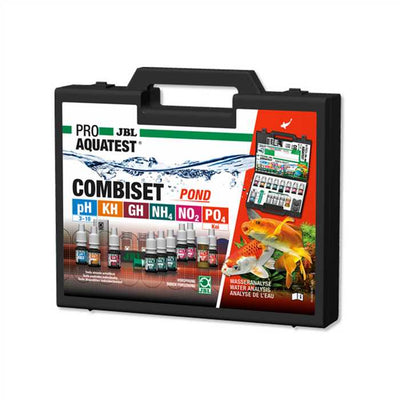
The JBL ProAquaTest CombiSet Pond case includes pH, KH, GH, ammonium, and nitrites. It provides a practical basis for these checks, but does not measure dissolved oxygen.
Also check the pump and filter
Is the water return as strong as usual? Was the pump stopped during work? Has the filter just been cleaned significantly? This information may explain why the pond's operation has changed.
After creating a pond or disturbing the filter, biological capacity cannot be deduced from water transparency. Overfeeding can exceed what the system can handle at that time.
Reducing or temporarily suspending feeding depending on the situation avoids aggravating the load. This accompanies the search for the cause; it is not a sufficient solution for a breakdown, pollution, or illness.
Transport, predator, construction: look for recent stress
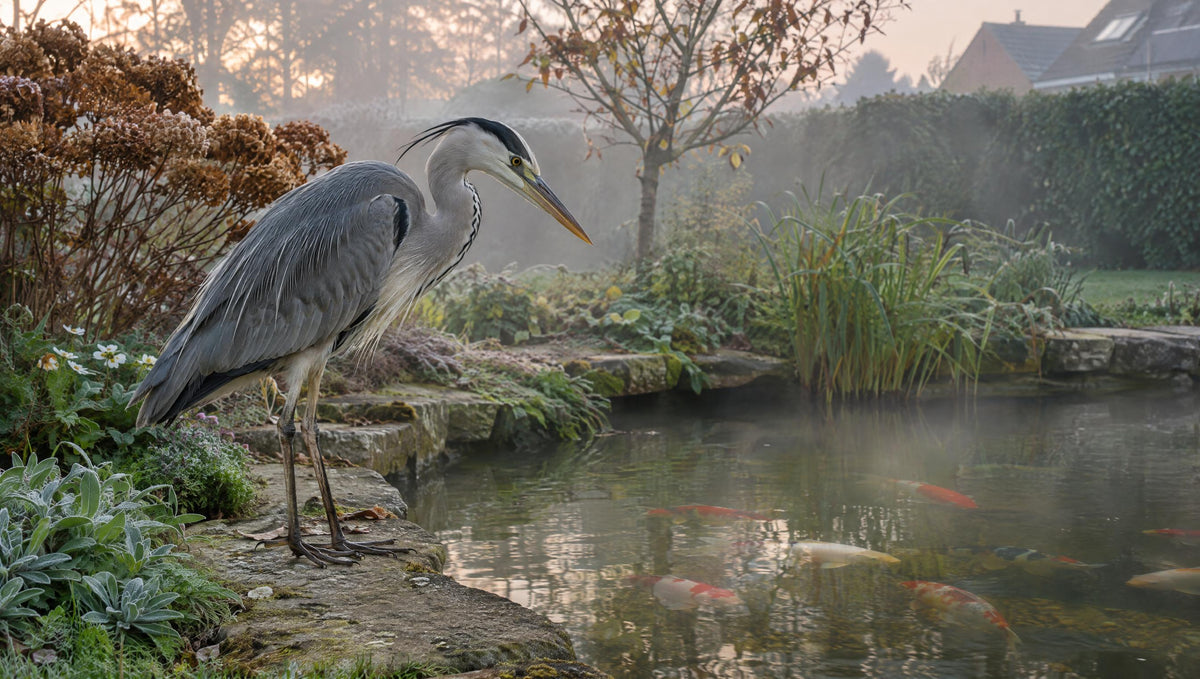
A new fish may remain shy after its arrival. Repeated foot traffic by the pond, noisy construction, or a predation attempt can also alter the group's habits.
Observe from a distance and restore a calm environment. Check existing shelters and events from the last few days. Avoid repeated captures intended solely to "see if it's doing better."
There is no set number of days during which any lack of appetite would be normal after transport. Respiration, posture, and changes in general condition must guide monitoring. A fish whose condition is deteriorating needs an opinion without waiting for an arbitrary deadline to pass.
Is the food itself suitable?
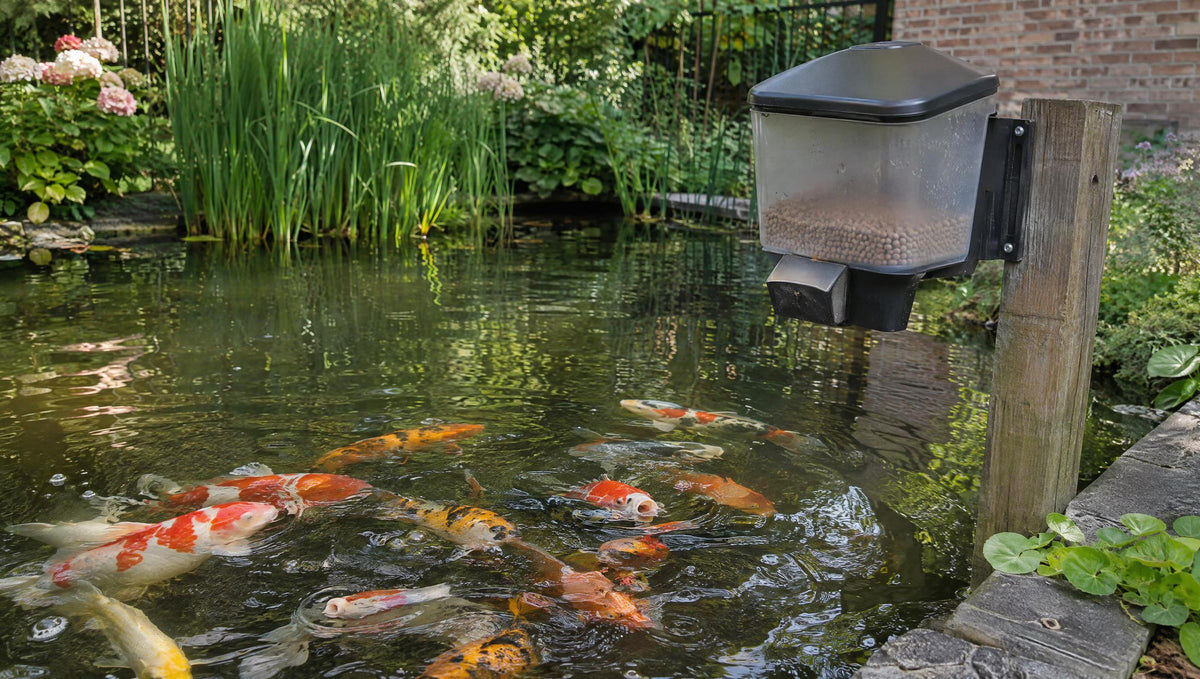
Examine the size of the pellets, their buoyancy, and the population for which they are intended. A small fish may struggle with a grain size adapted to large koi. A less confident fish may also have difficulty accessing the area where you feed.
Check the date and storage conditions indicated on the packaging. Close the container properly and avoid handling with a wet hand. Do not use food showing mold or suspicious alteration.
If you have changed formulas, note the date. A transition must remain compatible with temperature and the fish's condition. Do not compensate for a refusal with bread, leftovers, or improvised mixtures.
For a healthy group, distributing a small, accessible ration in several places can help observe if some fish are being pushed aside. This does not justify increasing the total amount or feeding during respiratory distress.
When does an individual problem become concerning?
A loss of appetite associated with weight loss, unusual swimming, clamped fins, repeated rubbing, or a lesion deserves further examination. Also look at whether the fish maintains its balance and breathes normally.
Do not assume that a fish is problem-free because its neighbors are still eating. Conversely, refusal of food alone does not allow for identifying a parasite or infection.
In case of labored breathing, loss of balance, mortality, or rapid worsening, seek veterinary advice quickly. Provide water measurements, a short video, and a list of recent interventions. Do not force the mouth open or improvise syringe feeding.
How to resume feeding?
Resumption becomes relevant when conditions are adapted and the fish show behavior compatible with feeding. Offer a small quantity of the appropriate food, observe consumption, and remove leftovers.
Increase gradually if appetite, parameters, and filter operation allow. Do not try to make up for missed meals with a large ration. The pond must be able to handle the additional load.
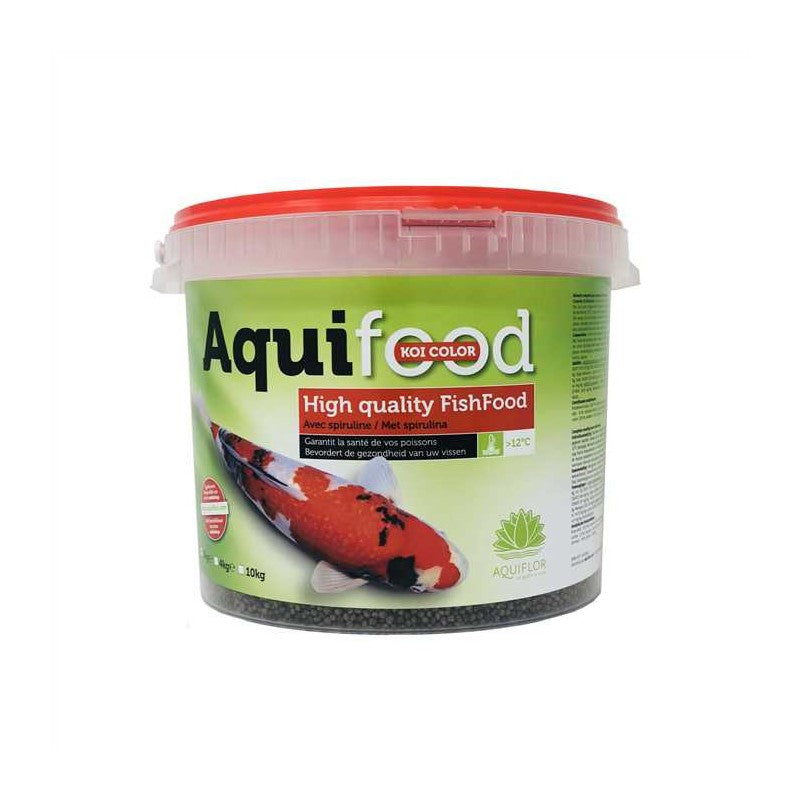
In cool weather, 3 mm floating Aquifood Wheat-Germ is one of the seasonal options offered by Aquiflor. The recommendation for transition under 15°C does not mean you should feed at any temperature below that: respect the packaging instructions and actual activity levels.
Suitable food supports a consistent routine. It does not treat an unknown cause of appetite loss and does not replace water correction or a diagnosis.
A simple order for moving forward
Observe the group, measure the temperature, test the water, check the circuit, then examine the food and recent events. This method avoids changing several things without knowing what helped.
Prepare for water checks →
Discover seasonal Aquifood Wheat-Germ →
Sources
- Hikari — Feeding Your Coldwater Fish: The Basics: appetite, temperature, quantities, and gradual resumption.
- OATA — How to Look After Pond Fish: feeding and pond monitoring.
- RSPCA — Fish Health: appetite changes and associated signs.
- Merck Veterinary Manual — Environmental Diseases of Aquatic Animals: water parameters and environmental difficulties.
- Aquiflor — Aquifood Wheat-Germ in low season: dietary transition under 15°C.
- Aquishop product sheets for related items: contents of the case and food characteristics.