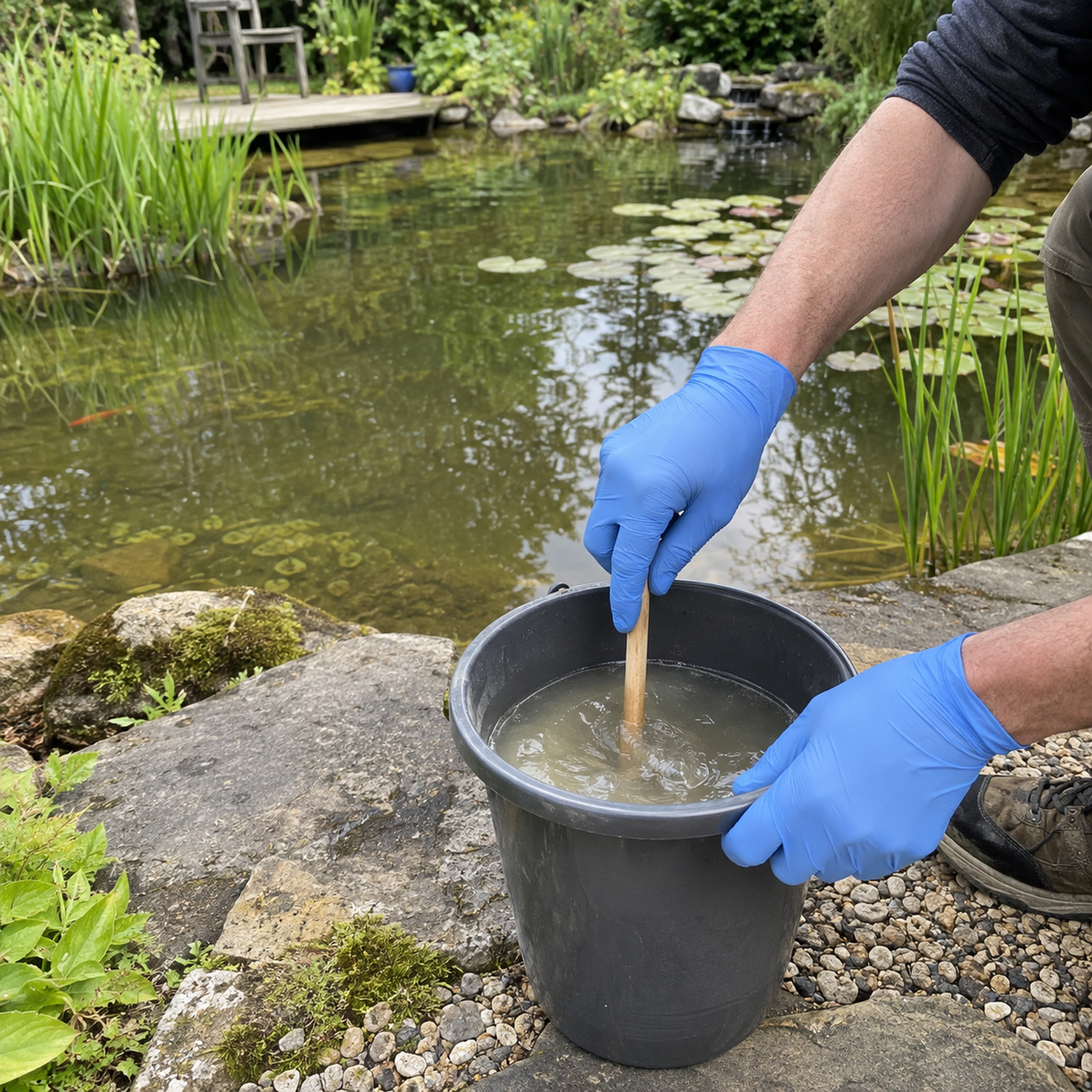

A layer of sludge settles near the baskets, leaves disappear into a soft bottom, and every movement of the net stirs up a brown cloud. Before seeking to remove all the silt, you must understand what has accumulated and choose a proportional intervention.
To quickly remove accessible deposits, a PondoVac pond vacuum allows for working in zones. To support the degradation of their organic fraction, Aquipond Bactovase constitutes a complementary approach. The two methods meet different needs: adding bacteria does not remove gravel, and vacuuming does not correct the ongoing input of leaves.

What kind of sludge are we talking about?
Pond sludge is a mixture. It can contain decomposed leaves, food scraps, excrement, dead algae, but also soil, sand, or particles brought in by runoff.
This distinction changes the solution. Micro-organisms participate in the transformation of organic matter. They do not make the mineral fraction disappear: if an edge lets soil in with every rain, you must first correct this intake.
Observe several spots from the bank, without stirring up the entire pond. A localized accumulation under a tree is not treated the same way as the general silting up of an old pond. Also, note the deep areas, baskets, and equipment likely to hinder suction.
Do you really need to remove all the deposits?
A living pond does not need a sterile bottom. Organisms use the sediments and vegetation as a habitat. In a natural pond, a complete cleaning can be much more disruptive than a few visible deposits.
Intervention becomes useful when accumulations significantly reduce depth, clog water intakes, or result from an overload of waste. A persistent bad odor or deteriorating fish behavior also requires checking the water, rather than automatically concluding that sludge is the sole cause.
Choose a concrete goal: clear the pump intake, remove a pile of leaves, or reduce an excessive layer in a given zone. This benchmark avoids continuing the cleaning just to obtain a perfectly uniform appearance.
Choosing the method according to the situation
| What you observe | First useful intervention |
|---|---|
| Leaves still recognizable and coarse debris. | Gentle removal with a net, with monitoring of animals present. |
| Loose deposits accessible in a landscaped pond. | Progressive suction with a device adapted to the depth and discharge. |
| Accumulation mainly organic, to be managed over time. | Reduction of inputs, adapted oxygenation, and examination of the benefits of Bactovase. |
| Soil or sand entering from the banks. | Correction of runoff, then mechanical removal of troublesome deposits. |
| Deeply silted pond or potentially contaminated sediments. | Professional diagnosis before choosing the work and destination of the sludge. |
Prepare the cleaning before plugging in the vacuum
Plan the route of the hoses and where the charged water will be collected. The discharge must remain supervised: a moved or obstructed hose can turn a simple intervention into an overflow.
Mark the initial level of the pond. Suction removes water along with sediments; consumption depends on the device, your progress, and the deposits. Prepare a potential top-up compatible with fish, taking into account chlorine or chloramines in tap water.
Work from a stable bank. Install the device and its power supply in accordance with the manual, with electrical protections adapted for outdoors. Unplug relevant equipment before any handling and do not let a pump run dry during the drop in level.
Avoid heavy intervention during extreme heat or when fish are already showing respiratory distress. Decomposing waste consumes oxygen; suddenly putting a lot of sediment back into suspension can worsen a fragile situation.
PondoVac 4 or PondoVac 5: which criterion to look at?
The PondoVac 4 uses a two-chamber system to suck and discharge alternately while working. OASE announces a maximum suction depth of 2.4 meters. This limit does not mean that the flow rate remains the same at all depths.

The PondoVac 5 features an integrated discharge pump. It facilitates certain discharge configurations, within the height and length limits provided by its manual. Its maximum advertised suction depth is 2.5 meters.
To choose, indicate the actual working depth, access to various zones, the elevation change to the discharge point, and the frequency of use. A high maximum flow rate value is not enough to predict the cleaning time at your location.
Vacuum progressively, without plowing the bottom
- Remove large obstacles. Remove accessible branches and piles of leaves after inspecting for small wildlife.
- Start with a limited zone. Choose a visible and easy-to-reach sector to get the hang of it.
- Move the nozzle slowly. Adapt the attachment and suction to the surface without snagging the liner or unnecessarily vacuuming decorative gravel.
- Watch for animals and the level. Stop if a fish approaches the nozzle, if visibility becomes insufficient, or if the water level drops too quickly.
- Leave other zones alone. Spread out a major intervention over time, especially in a pond rich in life.
A break allows the stirred-up particles to settle and helps you judge the result. Continuing blindly mainly increases the risk of hitting equipment or focusing on an area already cleaned.
Beware of the return of vacuumed water
The bag provided to retain large debris does not constitute a complete filtration of fine sludge. OASE specifies that the PondoVac 4 bag retains coarse particles larger than one millimeter.
If you send this water back into the pond immediately, some of the fine matter may return with it. Organize collection or treatment of the discharge adapted to your installation instead of assuming that the bag makes the water clean.
The destination of the sludge depends on its origin and the treatments used in the pond. Do not dump it into a stream or a drain. For a large volume or uncertain composition, inquire with the competent local authority.
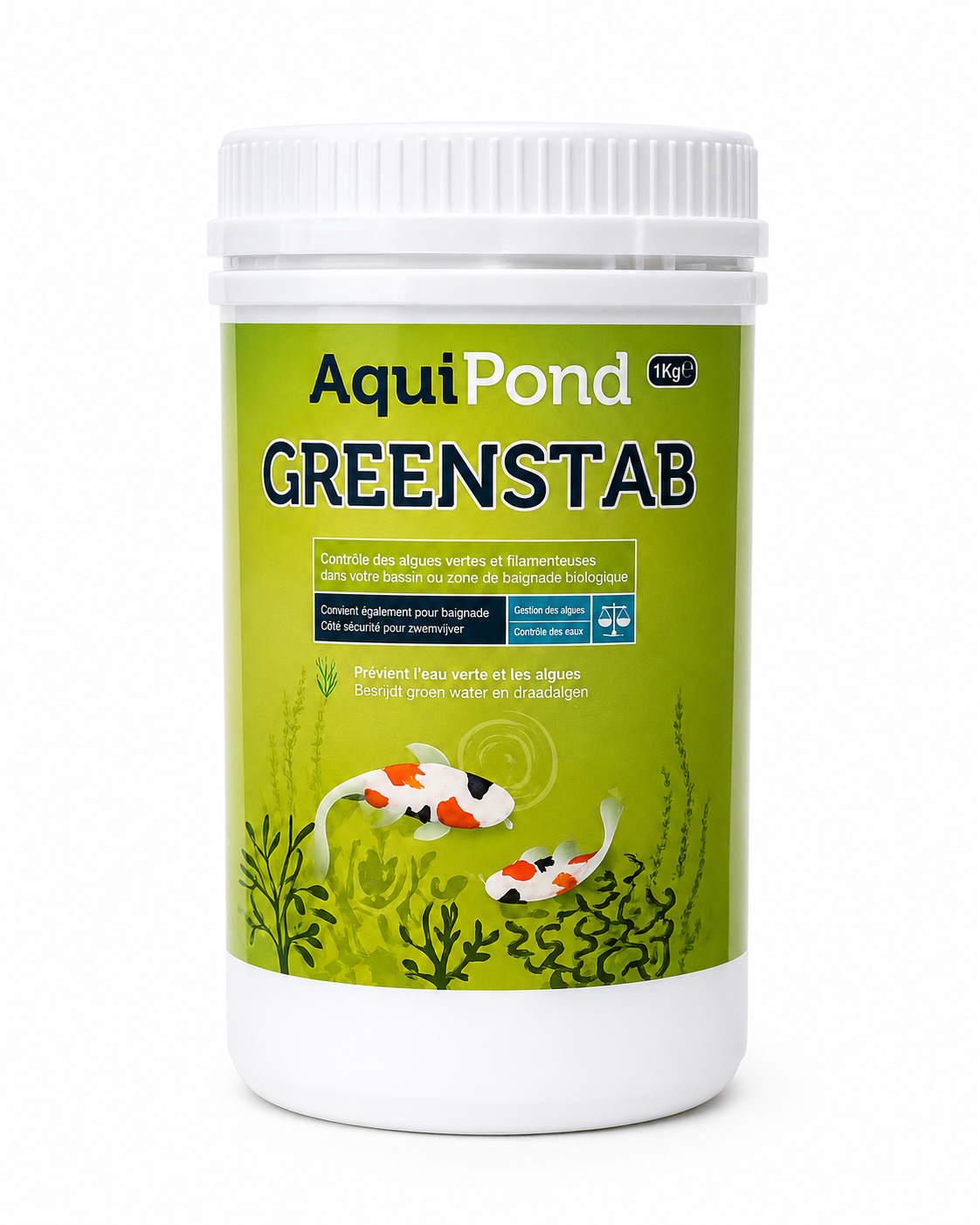
What is the role of Aquipond Bactovase?
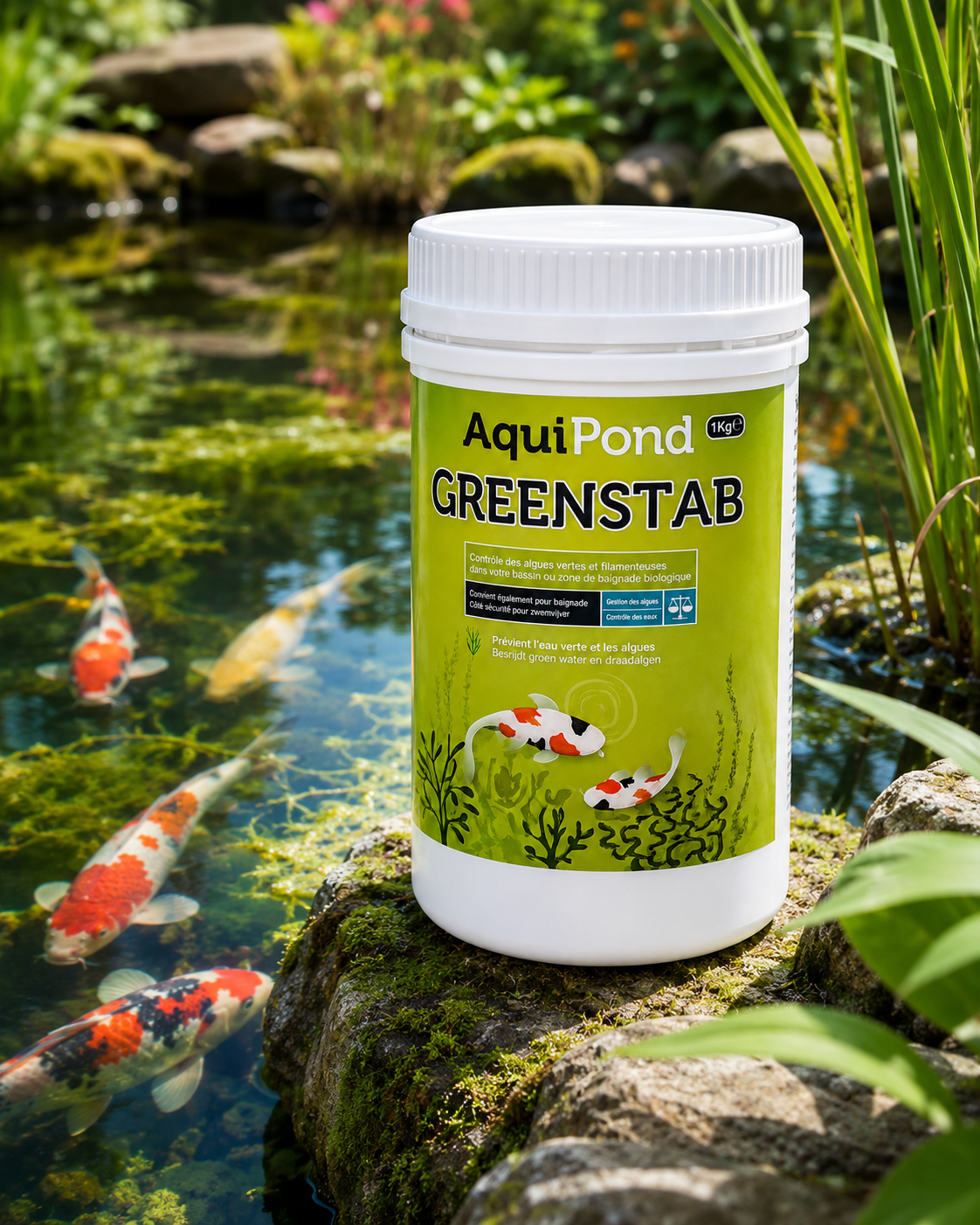
Aquipond Bactovase is presented by its manufacturer as an input of micro-organisms on mineral supports intended to promote the degradation of the organic fraction of sediments.
Its benefit lies in progressive maintenance. After removing accessible excess, it can be part of a program that limits new accumulations and maintains favorable conditions for biological activity.
It does not replace vacuuming a troublesome pile or removing sand. The result depends in particular on the composition of the sludge and the conditions of the body of water; identical reduction in all ponds cannot be promised.
Follow the current label for quantities and application conditions. Have the program confirmed based on surface area, the extent of deposits, and pond usage, especially for a large pond.
Prevent sludge from reforming too quickly
Remove leaves before they sink, adjust rations to fish consumption, and regularly evacuate waste captured by mechanical filtration.
Also check the edges and planting baskets. Substrate that escapes or soil carried in by a slope can sustain deposits despite frequent cleanings.
Photograph the same areas and note the interventions. This follow-up helps distinguish real improvement from a bottom that is simply more visible after a few days of settling.
Prepare an intervention adapted to your pond
Note the depth, the nature of the deposits, and the possibilities for discharge before choosing your equipment.
Discover the PondoVac 4 →
Compare with the PondoVac 5 →
Consult Aquipond Bactovase →
Sources
- OASE — PondoVac 4: operation, maximum depth, and recovery bag limits.
- OASE — PondoVac 5: integrated discharge pump and specifications.
- Aquipond — Bactovase: purpose and principle of the product.
- Royal Horticultural Society — Pond care and wildlife-friendly ponds: measured interventions and habitat preservation.
- USGS — Dissolved Oxygen: temperature and decomposition of organic matter.