Yes, it is possible to foster the development of beneficial micro-organisms in an aquarium yourself. That is precisely the principle behind filter maturation. However, brewing a cloudy liquid in a jar does not allow you to know which bacteria are multiplying within it, nor whether they will correctly process ammonium and nitrites once poured into the tank.
The real question then becomes: how do you establish a functional biological community, verify its performance, and maintain it? This approach avoids haphazard recipes and provides useful benchmarks for both startup and filter replacement.

Cultivating a filter is not the same as creating a pure strain
A laboratory can isolate and study micro-organisms using appropriate equipment, media, and control methods. At home, the goal is different: to allow a community to colonize the filter media. Its function is then evaluated by the transformations observed in the water, without precisely identifying all of its members.
The usual "Nitrosomonas then Nitrobacter" scheme is a historical simplification. Recent research highlights the importance of Nitrospira and micro-organisms capable of complete nitrification in freshwater biofilters. Therefore, it is not necessary to attempt to create a bottle containing a single type of bacteria to achieve a stable aquarium.
Why sugar or yeast recipes prove nothing
Visible fermentation can produce gas, an odor, or cloudiness. These signs attest to biological activity, without demonstrating an ability to handle nitrogenous waste from fish. Organisms that develop easily on sugar do not automatically fulfill the required role within a filter.
Pouring an uncharacterized organic mixture also adds a load that the aquarium must process. The water may become cloudy and oxygen consumption may increase. The issue is not choosing between a "natural" method and a commercial one: it is knowing what you are introducing and how to verify the result.
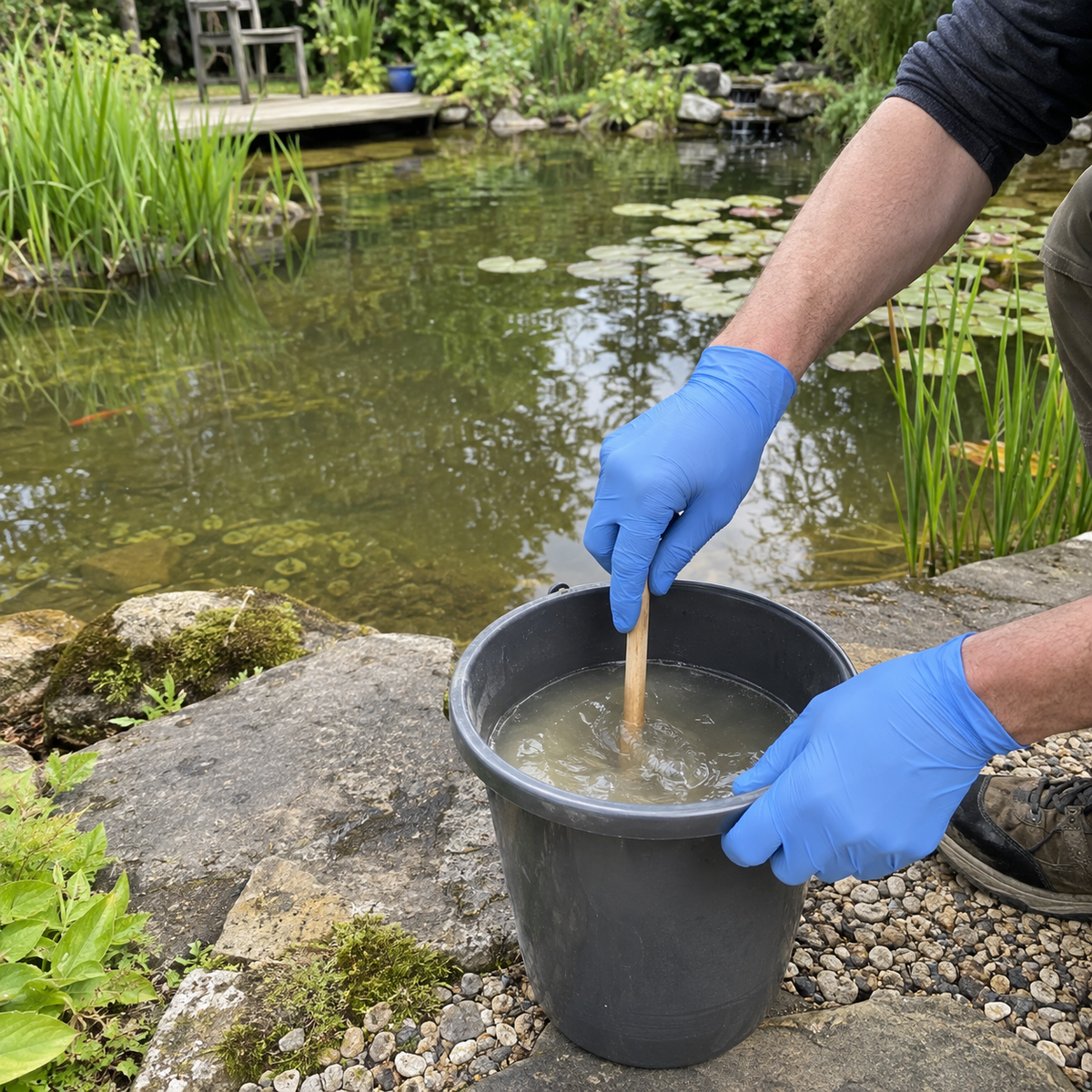
Do not collect sludge from a ditch or pond to seed an aquarium either. Its composition, potential contaminants, and transported organisms are unknown. A closed tank housing specific species deserves a more controlled origin for its material and products.
Preparing an environment favorable to micro-organisms
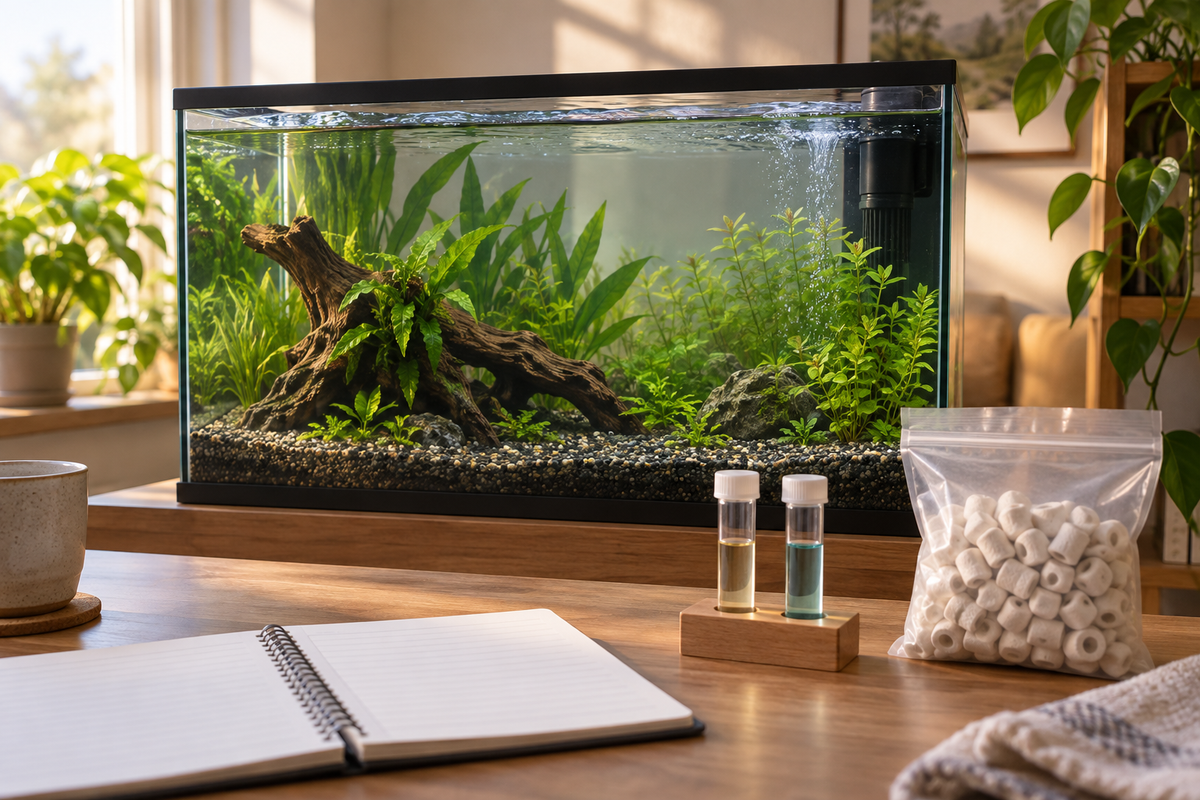
Install a suitable filter, with its media correctly positioned. Water must pass through the intended materials, without bypassing them due to an improperly placed basket. Check the flow rate, intake, and outlet. Maintain operation according to the device's recommendations: simply having still water over ceramic rings is not the same as a filter in operation.
Also, prepare the new water. When it contains chlorine or chloramines, an appropriate conditioner should be used according to its instructions. JBL Biotopol is an option for freshwater. Letting water sit is not a universal solution for all tap water treatments.
The choice of temperature, pH, and mineralization must match the future aquarium. Do not sharply increase the temperature or KH in the hope of accelerating the process without considering the plants, equipment, and intended population.
Organizing maturation without fish
The principle consists of preparing the filtration before exposing animals to the waste load they will produce. Micro-organisms need resources to grow: running a new aquarium for several weeks without understanding its inputs does not in itself prove that the filter is ready.
Choose a startup protocol adapted to the tank, ideally with a professional who knows the substrate, plants, and products being used. Some substrates release nitrogenous compounds at startup; others provide very little. This difference changes the interpretation of tests.
Do not use a household ammonia product to improvise the cycling: its concentration and other ingredients may be unsuitable. A fishless protocol must include controlled inputs, monitoring, and a defined endpoint. Doses cannot be deduced from a recipe found for an aquarium of a different volume.
Keeping a small tracking log
| Information | Why note it? |
|---|---|
| Date and time | Compare measurements taken in an identifiable context |
| Ammonium/ammonia and nitrites | Follow the compounds to monitor during maturation |
| Nitrates and replacement water | Avoid attributing nitrates already present in the tap water to the filter |
| pH, temperature, and maintenance | Understand changes after a water change or addition |
| Protocol-defined inputs | Link results to the actual load introduced |
A zero value for nitrites on the first day does not validate maturation. It may simply mean that production has not yet begun. Likewise, nitrates present in a planted tank are not enough to demonstrate that all steps are functioning correctly. It is the consistency of the tracking and protocol that counts.
In a recent study tracking three home aquariums, the establishment of communities and the evolution of nitrogenous compounds differed between tanks. This result illustrates the variability of the startup process; it does not provide a universal calendar to be applied to all aquariums.
Transferring mature media: useful, with conditions
A portion of filter media from a healthy aquarium can provide an already established community. The source tank must be known, without recent health issues or incompatible treatments. Media that is kept moist and maintained under good conditions does not have the same value as foam that has remained dry or locked away in stagnant water for a long time.
Prepare the transfer to limit wait time and install the media in a setup with proper circulation. Do not strip the donor tank’s filter: its fish still need that biological capacity. The transfer does not eliminate the need to test the new tank and does not allow for the immediate introduction of a large population.
If you are replacing your own filter, plan the transition before dismantling it. Depending on the device, temporary joint operation or transferring a portion of the media may be feasible. Verify the compatibility of the filter media and the water flow organization.
Can a commercial activator help?
JBL Denitrol is presented as an aquarium activator containing bacteria and enzymes. It offers an identified reference, instructions for use, and storage conditions to be respected. Use the bottle's instructions, without increasing the doses or randomly mixing multiple preparations.

The presence of an activator is not an independent guarantee of water quality. Continue measurements with appropriate equipment, such as the CombiSet Plus NH4. Also, do not confuse an aquarium product with a pond or sludge treatment: the instructions and dosages correspond to different uses.
After startup, conserve what works
Introduce the population gradually, based on the validated capacity and the needs of the species. Check the water after every significant change. A filter adapted for a few small fish can be overwhelmed by a sudden increase in the feeding load.
For maintenance, keep the useful biological media, avoid drying it out, and clean without seeking total sterilization. If fish are already present and nitrites appear, the priority becomes their protection and diagnosing the water, not preparing a homemade culture.
Are you starting an aquarium or changing your filter? Contact Aquiflor with the volume, substrate, filter model, and your initial analyses. You will be able to establish consistent tracking and choose the equipment that is truly useful.